



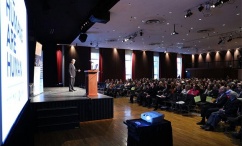
Lecture & Seminar Series
Gain a new perspective and learn new insights by attending one of our many lecture, seminar or speaker series events.



About FASS

Dalhousie's Faculty of Arts and Social Sciences offers a world of choices: thousands of courses, two hundred professors, thirty-five academic programs. Learn more about the Faculty.
Research in FASS

How can the study of humanities and social sciences inform policy, improve health and restore the environment? Find out how FASS research and researchers are changing the world.
- Dal joins pilot supplier program that could open doors for more diverse‑owned businesses
- Watershed moment: Atlantic First Nations Water Authority partners with Dalhousie to deliver world‑class water treatment
- Study reveals more than half of branded global plastic waste linked to just 56 companies
- Fining big polluters can reduce environmental damage, but only if the fines match the crimes
- Taking research to new places: Killam scholar trades Atlantic coast for expansive mountain ranges
FASS in Dal News
-
After Just for Laughs’ bankruptcy, we should ask Canadian comedians what they need to succeed
Expanding the circulation of our comedic content and continuing to invest in the production of stand-up specials — which is relatively low cost — could hugely boost the careers of Canadian comedians.
-
Waltzing through the Victorian era with Dalhousie’s Costume Studies program
Graduating Costume Studies students transported guests back to Victorian England last week during 1837: A Presentation of Historical Dress, showing off petticoats, corsets, ballgowns, bustles and more of their creations inspired by the era.
-
The legal system must show more compassion to survivors of sexual abuse
Survivors of gender-based abuse can often feel retraumatized by the justice system. But simple acts of validation and support can make a meaningful difference and restore a sense of agency.
-
From nitrogen to activism: Unveiling Dalhousie’s 2024 Doctoral Thesis Award winners
Drs. Joseph Bedard and Tari Ajadi are being recognized for exceptional dissertations that have made significant and original contributions to the academic community and Canadian society.
-
It’s thrilling to see female‑led groups like The Beaches claim space in rock culture at Junos 2024 and elsewhere
The 2024 Junos highlighted the importance of representation and diversity within the music industry in traditionally male-dominated genres.
-
This unique graphic novel will make you reimagine what a university class can be
Dal history prof Dr. Lisa Binkley challenged students to take what they were learning in her course about Métis identities, literature, laws, and history and integrate it into a graphic novel adaptation of Métis author K.D. Beckett's book Rocking Ten.
-
Dalhousie sociologist receives $1.9M to cultivate network aimed at reducing emissions in Canadian agriculture
Dr. Karen Foster was selected to lead a new national research network that supports the equitable transition to net-zero in Canadian agriculture and its periphery industries.
-
‘I finally got the guts’: Award‑winning journalist Anna Maria Tremonti opens up about living with abuse
In this year's Shaar Shalom Lecture, the former CBC reporter and host detailed the abuse she endured during her first marriage and eloquently unbraided the threads of "shame, blame, and pain" she carried with her for more than 40 years.